
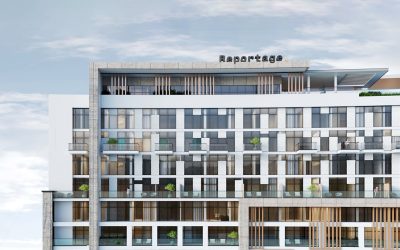
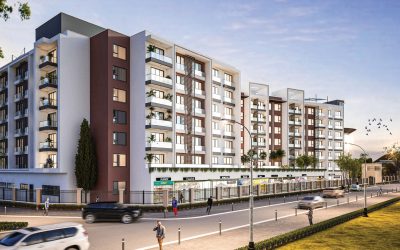
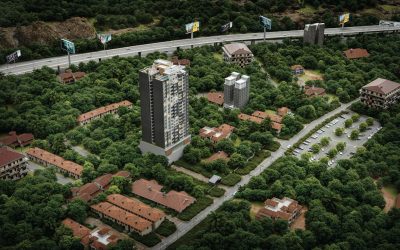

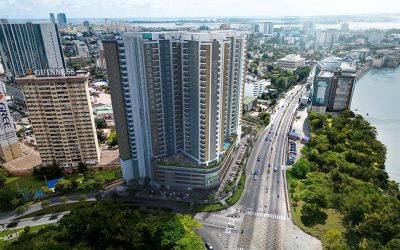
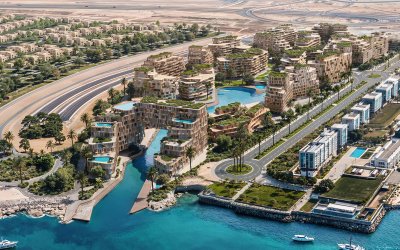


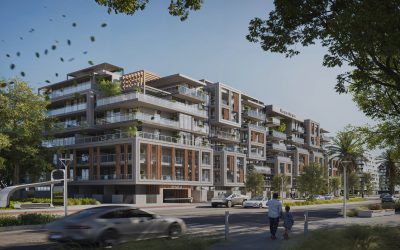
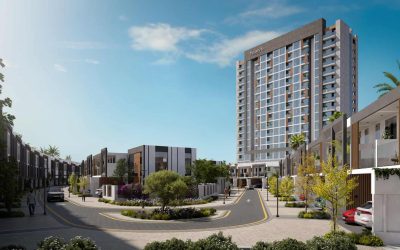
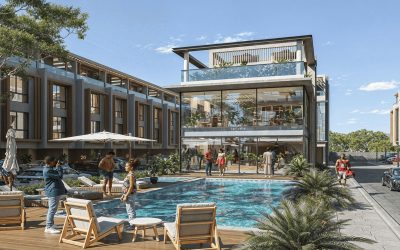

As the UAE property market moves from 2025’s record pace into a steadier 2026 cycle, buyers are paying closer attention to how a developer is funded. A debt-free real estate developer Dubai or Abu Dhabi buyers choose, one that builds through equity and buyer payments rather than bank leverage, stands on stronger financial footing than one carrying heavy external leverage, separate from the legal protection escrow already provides. Reportage Group, which recorded AED 9.6 billion in 2025 sales on a debt-free operating model, is one example of how this is playing out in practice.
A Market That Is Growing Up
For the better part of three years, the UAE property market moved at velocity. Prices rose in double digits, and off-plan units were often gone within days of release. That pace has not disappeared in 2026, but it has cooled into something more sustainable, and the numbers below show exactly how.
Dubai recorded 79,281 residential sales worth AED 221.4 billion in the first half of 2026, compared with 91,973 transactions worth AED 262.6 billion over the same period a year earlier. Annual price appreciation, which ran as high as 12% to 22% through 2024 and into 2025, is now forecast at 3% to 8% for the year. Rents have started to ease as well, with some markets reporting quarter-on-quarter declines after several years of near-uninterrupted increases.
None of this points to a downturn. Analysts describe it as a transition into a more balanced, end-user-driven phase, supported by continued population growth, rather than a correction. But it does change buyer behaviour. When a market moves fast enough that almost anything appreciates, the developer’s identity matters less than simply getting an allocation. When growth moderates and supply expands, with eighty thousand to one hundred twenty thousand new units expected across Dubai in 2026, buyers have more to choose from and more time to choose carefully. That is the environment in which a developer’s financial footing moves from a footnote to a genuine part of the decision.
This is also why search terms such as reliable property developer UAE, debt-free real estate developer Dubai, best off-plan developer UAE 2026, trusted real estate developer Abu Dhabi, and developer track record Dubai have moved from niche to mainstream. Each phrase points to the same question: not which project looks best, but which company behind it is built to finish what it starts.
What Does It Mean to Be a Reliable Property Developer in the UAE?
A reliable property developer UAE buyers can count on is one whose projects reach handover close to the promised date, consistently, across market cycles, not only during periods of strong demand. That reliability rests on three things: a properly registered escrow structure protecting buyer funds, a construction and delivery process the developer controls rather than depends on numerous external parties to execute, and a financing model that does not leave the project exposed if the market slows.
Why Off-Plan Project Delivery Risk Is Getting More Attention in 2026
Off-plan project delivery risk has always existed in Dubai and Abu Dhabi, and research consistently finds that a meaningful share of off-plan projects, estimates commonly range from 40% to 50%, experience some delay before handover, from a few months to well over a year.
As supply grows and sales moderate in 2026, that risk is harder to absorb quietly, for two reasons. First, developers that took on significant external financing to fund rapid, simultaneous launches during the boom years now face that financing against a slower sales environment, pressuring cash flow precisely when buyers are watching more closely. Second, buyers have more information available and more time to use it, since they are no longer racing to secure an allocation before a project sells out in a single weekend.
Debt-Free Versus Leverage-Heavy: What Actually Separates the Two Models
Most real estate development, including in the UAE, is financed through a land acquisition loan, a separate construction facility from a bank, and buyer instalments collected through the sales process. Buyer payments do double duty, funding construction while also keeping the developer’s own lenders satisfied that a project remains on track.
This is a normal way to build, and it works well under stable conditions. Strain appears when conditions shift, when sales slow on one project while a developer carries financing across several others, or financing costs rise. None of that shows up in an escrow account, since escrow only governs money buyers have already paid. It has no bearing on whether the developer’s broader financing arrangements remain healthy.
A debt-free real estate developer Dubai buyers might compare against a leveraged one removes one layer of that structure. There is no construction loan running in parallel with buyer instalments, and no external lender whose confidence must be maintained alongside the buyer’s own. Development is funded through the company’s own equity, buyer payments as they are collected, and profit reinvested from completed projects. It does not eliminate every source of delay, contractor issues and permitting timelines remain real regardless of financing model, but it removes one specific and common one: a project slowing because the developer’s own financing came under pressure, independent of anything happening on site.
What Is a Debt-Free Real Estate Developer, and Why Is It Rare?
A debt-free real estate developer is one that funds land acquisition and construction primarily through its own equity, buyer payments, and reinvested profit, rather than through bank loans or external credit facilities tied to future sales.
This structure is relatively unusual at scale because leverage allows developers to grow faster than equity alone typically permits and used responsibly it is not a sign of weakness. Most large developers rely on some mix of land loans, construction facilities, and corporate debt as a standard part of how they operate.
What matters for a buyer is not whether leverage exists somewhere in the industry, but how exposed the specific project is if conditions change. A well-managed developer carrying moderate debt is not automatically a worse choice than a debt-free one. But a developer that has taken on significant leverage across many simultaneous launches, as the broader market moderates, carries a category of risk a debt-free structure does not have to manage.

Our Own Model in Practice
Reportage Group is one of the clearer examples of this approach at meaningful scale. Group recorded AED 9.6 billion in sales in 2025, a 90% increase year on year, placing us among the fastest-growing developers in the region even as the broader market began to moderate heading into 2026. That growth came through equity, buyer payments, and reinvested profit, without reliance on external bank leverage.
Operating debt-free gives us greater financial flexibility, more balanced growth, and faster decision-making. It also rests on a structural choice we made early on: we control approximately 80% of our own value chain, spanning development, construction, procurement, and final delivery. That level of vertical integration reduces the number of external parties whose own financial pressures could indirectly affect a buyer’s handover date.
Reportage Group is a leading UAE-based private and debt-free real estate developer, with a rapidly expanding portfolio spanning the Middle East, Africa, Europe, Asia, the United Kingdom, and the United States, and a total portfolio value exceeding AED 60 billion.
Reportage Group has achieved AED 9.6 billion in sales in 2025, marking an impressive 90% year-on-year growth, reinforcing its position as one of the fastest-growing real estate developers.
Its portfolio includes landmark developments such as Brabus Island, SENSI, Verdana, Marlin 1 & 2, R. Hills, and Panorama by Elie Saab, alongside a diversified range of residential and mixed-use communities across the UAE and international markets.
Headquartered in Abu Dhabi, Reportage Group continues to strengthen its global footprint while remaining committed to delivering high-quality communities, strong investment value, and upscale living experiences made more accessible to homeowners and investors alike.
How To Do Developer Due Diligence in the UAE Before You Buy Off-Plan
Developer due diligence UAE checklists have traditionally focused on three checks: is the project registered, is there an escrow account, and does the location and price make sense. Those checks remain necessary, but they are no longer sufficient alone, and a more complete process looks at the developer’s financial structure directly.
Ask how the developer funds construction. A clear, specific answer, whether that involves bank facilities, equity, or a combination, is itself informative, and reluctance to answer plainly is worth noting.
Ask about the developer’s track record on handover dates across its existing portfolio, not only the project being marketed. A pattern across many completed developments, under different market conditions, tells you more than a single flagship building.
Ask how much of construction and delivery the developer controls directly versus how much sits with third-party contractors, since this is directly relevant to how many outside parties’ financial health could affect your project.
Finally, confirm the escrow account is properly registered, and ask whether the developer proactively shares construction progress against the payment schedule. Transparency offered without being asked tends to correlate with a developer that has nothing to obscure.

What Makes a Trusted Real Estate Developer in Abu Dhabi Different From Dubai
A trusted real estate developer Abu Dhabi buyers evaluate is measured against a slightly different backdrop than one operating primarily in Dubai. Abu Dhabi’s residential market has remained comparatively stronger through 2026, supported by tighter supply in prime locations and a more constrained handover environment, even as Dubai’s broader market has moderated.
There is also a technical difference worth knowing when comparing the two markets. Dubai’s Golden Visa eligibility, following removal of the upfront payment requirement in a February 2026 circular, is assessed on a property’s total certified value, mortgage included. Abu Dhabi’s criteria count only equity held outside any mortgage. A developer active in both markets, as Reportage Group is, has to satisfy both frameworks at once, which in practice means holding to financial discipline under two separate regulatory lenses rather than one.
Best Off-Plan Developer UAE 2026, What Buyers Should Actually Compare
There is no single, universally agreed answer to which is the best off-plan developer UAE 2026 has to offer, and any source claiming a definitive ranking should be read with some scepticism. What buyers can reasonably compare, project by project, are the specific factors this article has walked through: escrow registration, handover track record across a portfolio rather than a single project, how much of construction and delivery the developer controls directly, and how the developer funds its pipeline in the first place.
On that last point, financially stable developers UAE buyers increasingly seek out distinguish themselves by being transparent about their funding model rather than treating it as a private matter. A debt-free structure, paired with a delivery arm the developer actually controls, is one clear version of that stability in practice. It is not the only version, but it has become considerably easier for buyers to verify than it was even two years ago.
Frequently Asked Questions
What makes a developer reliable in the UAE property market?
A reliable developer consistently delivers projects close to the promised handover date across market cycles, maintains a registered escrow account, controls a meaningful share of its own construction and delivery process, and can clearly explain how it funds its pipeline.
What is a debt-free real estate developer, and why does it matter in Dubai?
A debt-free developer funds construction through equity, buyer payments, and reinvested profit rather than bank loans tied to future sales. In Dubai, where off-plan supply is expanding and growth is moderating in 2026, this removes one specific source of handover delay: financial strain originating from the developer’s own leverage rather than site conditions.
How is the UAE real estate market different in 2026 compared to 2025?
Dubai recorded 79,281 residential sales worth AED 221.4 billion in the first half of 2026, down from 91,973 transactions worth AED 262.6 billion in the same period of 2025. Annual price growth has moderated from 12% to 22% in 2024 and 2025 to a forecast of 3% to 8% in 2026. Abu Dhabi has remained comparatively stronger over the same period.
Does escrow already protect buyers from off-plan project delivery risk?
Escrow protects funds a buyer has already paid, releasing them only against verified construction milestones. It does not address whether the developer has sufficient capital or credit standing to complete the project on schedule if its broader financing comes under pressure.
What is Reportage Group’s sales performance, and how does it relate to its funding model?
Reportage Group recorded AED 9.6 billion in sales in 2025, a 90% increase year on year, achieved through a debt-free model funded by equity, buyer payments, and reinvested profit, combined with a vertically integrated structure controlling roughly 80% of its own value chain.
How should buyers approach developer due diligence in the UAE now compared to previous years?
Alongside the traditional checks of escrow registration, location, and price, buyers should now ask how a developer funds construction, review its handover track record across multiple projects, and assess how much of the delivery process it controls directly rather than outsources.